One year on from the allision between the MV Solong and Stena Immaculate in the Humber, Robert Merrylees, Policy Director and Secretary of the British Tugowners Association (BTA) explores calls for the Maritime and Coastguard Agency (MCA) and UK Government to review and strengthen the UK’s emergency response capability.
On 10 March 2025, the container ship MV Solong collided with the anchored tanker Stena Immaculate, igniting aviation fuel and triggering a major fire that tragically claimed one life. The incident demonstrated how quickly a drifting or disabled vessel can escalate into a serious emergency – and how vital immediate towage support is to prevent wider catastrophe.
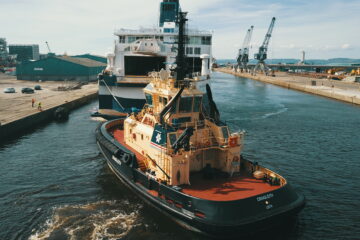
Tug crews were among the first responders on scene, and their actions, alongside those of other operators – helped prevent an even worse outcome. However, the incident also exposed how unevenly distributed the UK’s towage and emergency response assets are.
The UK Emergency Towing Vessel (ETV) fleet was born out of environmental disaster, when in 1993 the MV Braer ran aground off the coast of Shetland. It was subsequently recommended that the UK government maintain a dedicated fleet of ETVs. Since the early 2000s, the UK maintained a publicly funded fleet of four ETVs stationed at high‑risk coastal locations and available year‑round, but this was largely dismantled after the 2010 Spending Review, leaving only one vessel – the Ievoli Black – operating in northern and western Scottish waters.
Today, the MCA depends on the Coastguard Agreement on Salvage and Towage (CAST) agreement, relying on commercial tugs when an incident occurs, a system that can leave high‑risk regions exposed and vulnerable, posing avoidable risks to seafarers, coastal communities, critical infrastructure, and the marine environment.
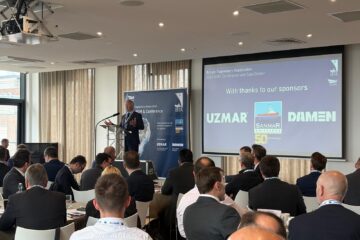
In May 2025, during her address to the BTA Annual Conference, MCA Chief Executive Virginia McVea described the UK’s towage operators as a “critical national capability”, acknowledging the essential role commercial tugs played in the Humber response and announcing a Government “deep dive” review into national salvage capacity.
As we look ahead, building a modern, resilient emergency towing framework that reflects the realities of today’s maritime environment, must be a priority. To ensure the UK has reliable access to sufficient emergency capability from tugs and other craft, particularly in waters where commercial availability is limited, this review should now be accelerated.
In moving this forward Government and the MCA should;
- Update the UK’s emergency towing risk model, using modern, holistic criteria that account for today’s maritime operating environment and risk factors, including passenger and crew safety, congested sea lanes, increasing vessel size, offshore wind installations, and the environmental vulnerability of coastal regions.
- Consider within this, restoration of dedicated Emergency Towing Vessel coverage in high‑risk areas, where commercial capacity is limited and where traffic density and environmental risk are greatest such as the South West approaches, Dover Strait approaches and Scottish waters.
- Establish collaborative working groups with industry to develop sustainable policy and consider funding solutions, bringing together towage operators, marine insurers, offshore energy developers, ports, the Crown Estate, and regional bodies to explore sustainable cost‑sharing models and balanced national coverage.
Towage operators are already investing in new capabilities, new technologies and highly trained crews – but long‑term resilience will only be achieved through a coordinated national approach.
What industry needs now is a clear pathway: better integration of commercial towage assets into national planning, consistent year‑round coverage in high‑risk waters, and a funding model that gives certainty to both Government and operators.
With the right structure, the UK can prevent emergencies from becoming disasters.
Industry delivering its own safety improvements
Alongside its call for a strategic holistic review of the national capability, the BTA published the world’s first dedicated industry guidance on Use of Tugs in Firefighting, supporting operators with best practice for emergency onboard incidents and reinforcing the sector’s commitment to safety and preparedness.
These issues will be discussed in depth at the British Tugowners Association Annual Conference, taking place in Liverpool on 7 May 2026 where operators, regulators and sector partners will examine the future of the UK’s emergency towing, firefighting capability and salvage.