On any major salvage under Lloyd’s Open Form with SCOPIC invoked, one role is consistently misunderstood, sometimes resented, and always consequential: the SCR
By Edwin Lampert
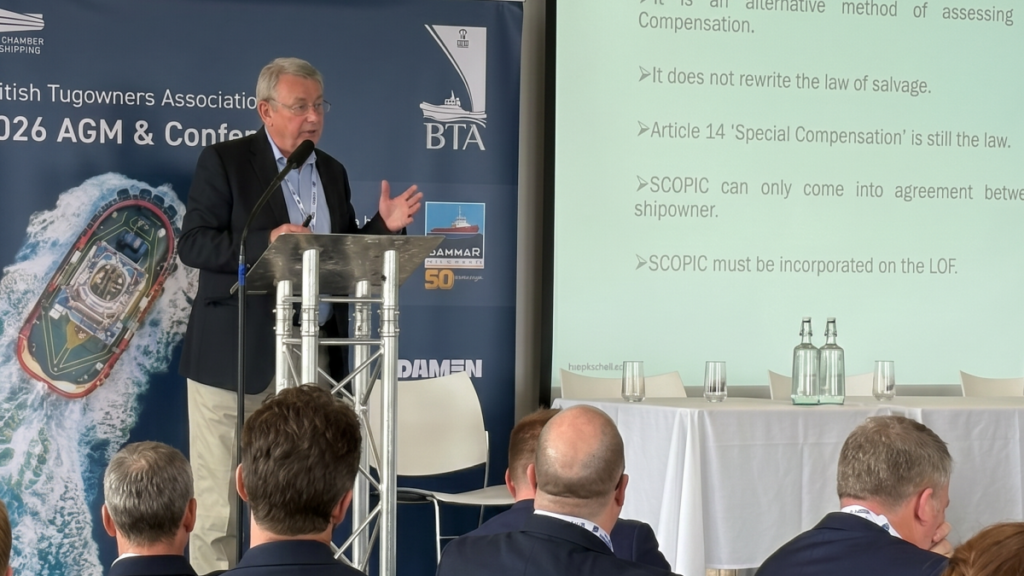
Nick Haslam (Brookes Bell): “The SCR isn’t the contractor’s enemy” (source: Brookes Bell)
Appointed by the shipowner, the Special Casualty Representative (SCR) attends site, reviews daily reports and produces a final account of an operation.
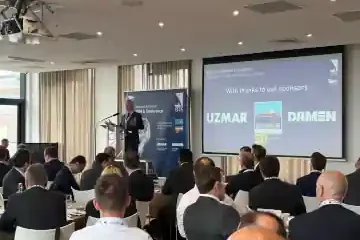
Nick Haslam of Brookes Bell, speaking at the British Tugowners Association Annual Conference in Liverpool and drawing on more than 30 SCOPIC cases, put it plainly: “The SCR isn’t the contractor’s enemy. And if that perception exists, either the SCR or the contractor is probably not doing something correct.”
The role exists because of a flaw in the 1989 Salvage Convention. Article 14 introduced special compensation to protect salvors responding to environmentally sensitive casualties; but did so in terms that proved deeply ambiguous. The SCOPIC Clause, developed from 1998, replaced that uncertainty with a far more detailed framework: 16 clauses, three appendices, and two codes. It is clearer than Article 14, but not immune to confusion.
The key operational distinction is between incorporation and invocation. SCOPIC is incorporated into LOF when box 7 is ticked but only takes effect when the contractor invokes it in writing. That decision changes how the entire operation is assessed. Only then does the SCR’s role begin. Its core duty, to use best endeavours to save property and prevent environmental damage, aligns with the contractor’s own.
Friction most often arises in daily reporting. The salvage master submits a report; the SCR endorses it if agreed or raises queries if not. In practice, almost all disagreements – Mr Haslam puts it at 99.9 per cent – are resolved on site. The SCR is therefore not an auditor hunting for discrepancies, but a collaborator whose default position is agreement.
Where disagreements are recorded, their resolution must also be recorded. Arbitrators read the full file, and unresolved dissent can distort the eventual award. An SCR who keeps the documentary record aligned with the operational reality reduces both the cost and duration of arbitration.
The final SCR report is central to proceedings. It does not argue; it records. Its purpose is to set out what happened, how long it took, and what it cost with enough precision for the arbitrator to reconstruct the operation.
Given the scale and duration of major salvages, disciplined cost tracking is essential. An SCR who maintains a running, cross-referenced record alongside the salvage master’s accounts helps close the gap between interim estimates and final settlement.
For those encountering the role for the first time, none of this is obvious. Mr Haslam’s practical advice is to study the Lloyd’s Salvage Arbitration Branch Guidelines for SCRs for practical, not procedural, reasons.
A salvage operation works best when the SCR and contractor are aligned, he concluded, because, in substance, they are.
The article can be found on Riviera’s website here – Riviera – News Content Hub – Appointed by the shipowner, the Special Casualty Representative attends site, reviews daily reports and produces a final account of an operation.
With gratitude to Edwin Lampert and Riviera for granting permission to the BTA to publish the article.